
Why Attend the Only ADC Payload Specific Event?
As ADC developers face increasing pressure to overcome resistance, differentiate pipelines, and consider moving beyond crowded TOPO-1 and tubulin payload classes, the 3rd ADC Payload Summit provides a dedicated forum to explore the next generation of payload innovation.
Designed for scientists driving payload discovery, optimisation, and clinical translation, this meeting will uncover how novel mechanisms of action, dual-payload strategies, smarter ADC engineering, and improved translational approaches can unlock greater efficacy while maintaining safety and tolerability. Through expert-led case studies, interactive discussions, and targeted networking opportunities, attendees will gain practical insights to de-risk development, identify new partnership opportunities, and stay ahead of the rapidly evolving ADC payload landscape.
Brand New Event Focus:
Unlock the Potential of Dual-Payload ADCs
Explore the latest advances in dual and multi-payload design, including strategies to combine complementary mechanisms, overcome resistance, and expand the therapeutic window without introducing unacceptable complexity or toxicity.
Participate in Brand-New Curated Matchmaking Roundtables
Move beyond traditional networking with pre-curated discussions designed to connect you with peers, potential collaborators, technology providers, and partners tackling the same payload challenges.
Discover Novel Payload Mechanisms Beyond Traditional Cytotoxics
Evaluate emerging payload classes including pathway inhibitors, NMT inhibitors, RNA splicing modulators, and degrader conjugates that have the potential to redefine ADC efficacy and differentiation.
Learn How to Overcome ADC Resistance Through Smarter Payload Strategy
Gain practical insights into resistance biology, payload sequencing, combination approaches, and next-generation mechanisms designed to address the limitations of established TOPO-1 and tubulin payloads.
Improve Clinical Translation & Reduce Development Risk
Explore human-relevant models, translational case studies, and lessons from discontinued programs to improve payload selection, predict toxicity earlier, and increase confidence in development decisions.
Explore the Full Event Guide:
- 3 Days of Deep-Dive Content Exploring Novel Payload Mechanisms, Resistance Biology & Next-Generation ADC Design
- 70+ ADC Leaders Across Payload Chemistry, Biology, Discovery & Translational R&D
- 2 Interactive Pre-Conference Workshops on Dual Payload ADCs & Expanding the Therapeutic Window
- Brand-New Curated Matchmaking Roundtables Connecting You with Potential Partners, Collaborators & Solution Providers
- Exclusive Case Studies, Panels & Discussions on Non-Cytotoxic Payloads, Multi-Payload Strategies & Overcoming TOPO-1/Tubulin Resistance
Explore the Agenda
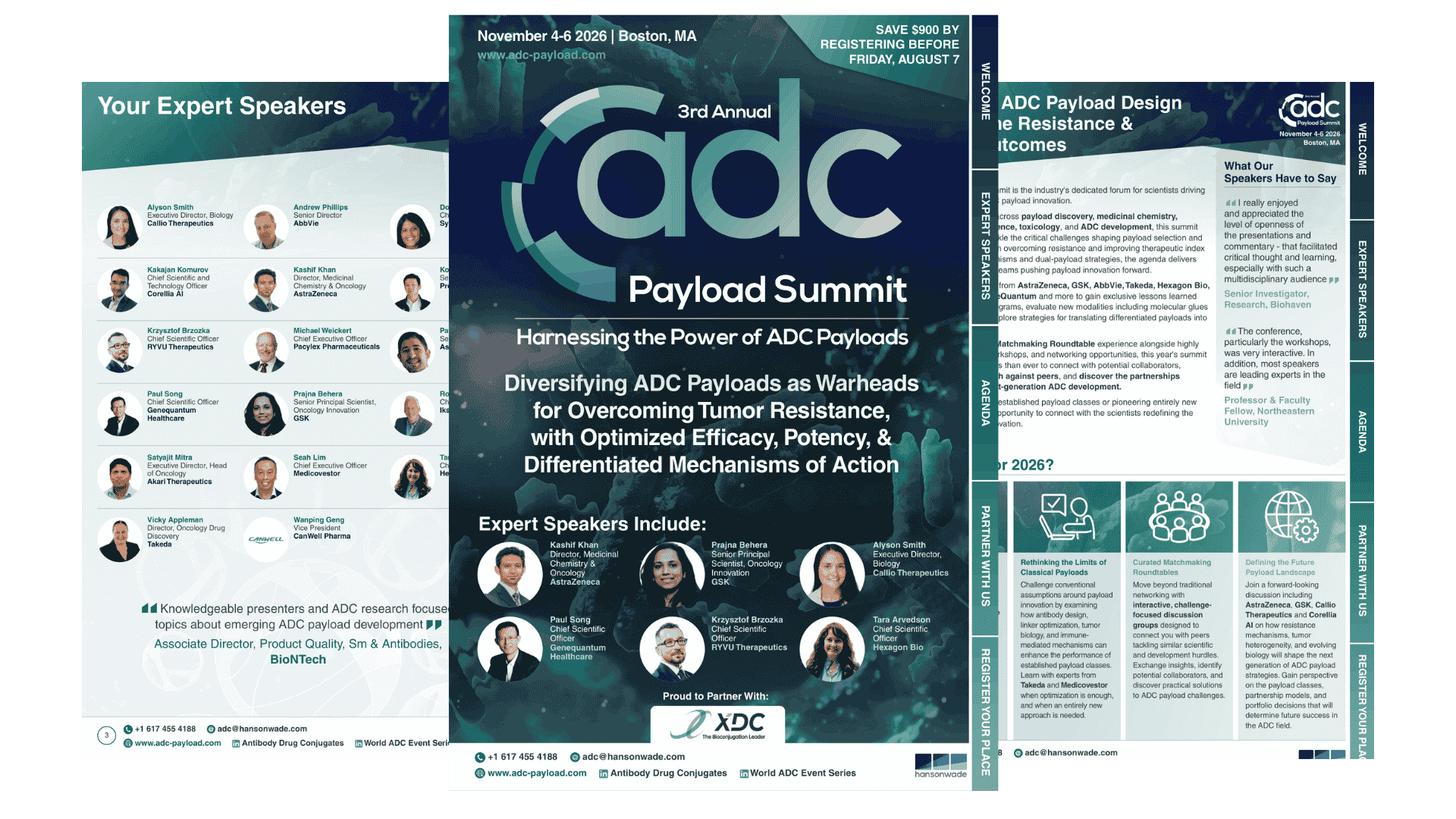
Discover the complete agenda featuring novel payload mechanisms, dual-payload ADCs, resistance biology, therapeutic index optimisation, and the industry leaders redefining ADC payload innovation.
Partner With the ADC Payload Community
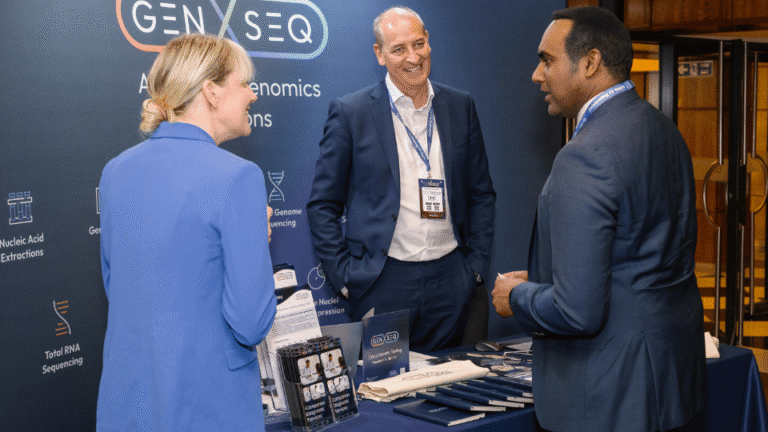
Position your organization alongside 70+ senior payload, chemistry, biology, and translational R&D leaders actively seeking technologies, expertise, and collaborations to accelerate next-generation ADC development.
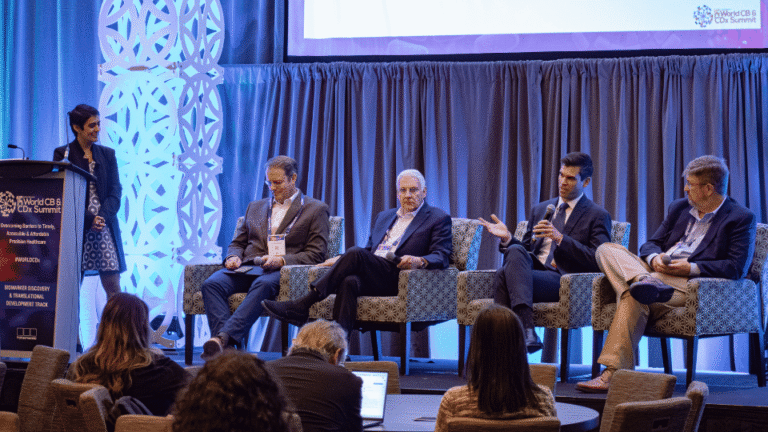
Join 70+ ADC Payload Leaders
Connect with scientists and decision-makers from biopharma and biotech companies tackling the industry's biggest challenges, from overcoming resistance and diversifying payloads to improving clinical translation.